
Measure seeks to protect civil rights, boost police transparency, and strengthen public trust
Jinggoy urges passage of bill mandating body cameras for all law enforcers
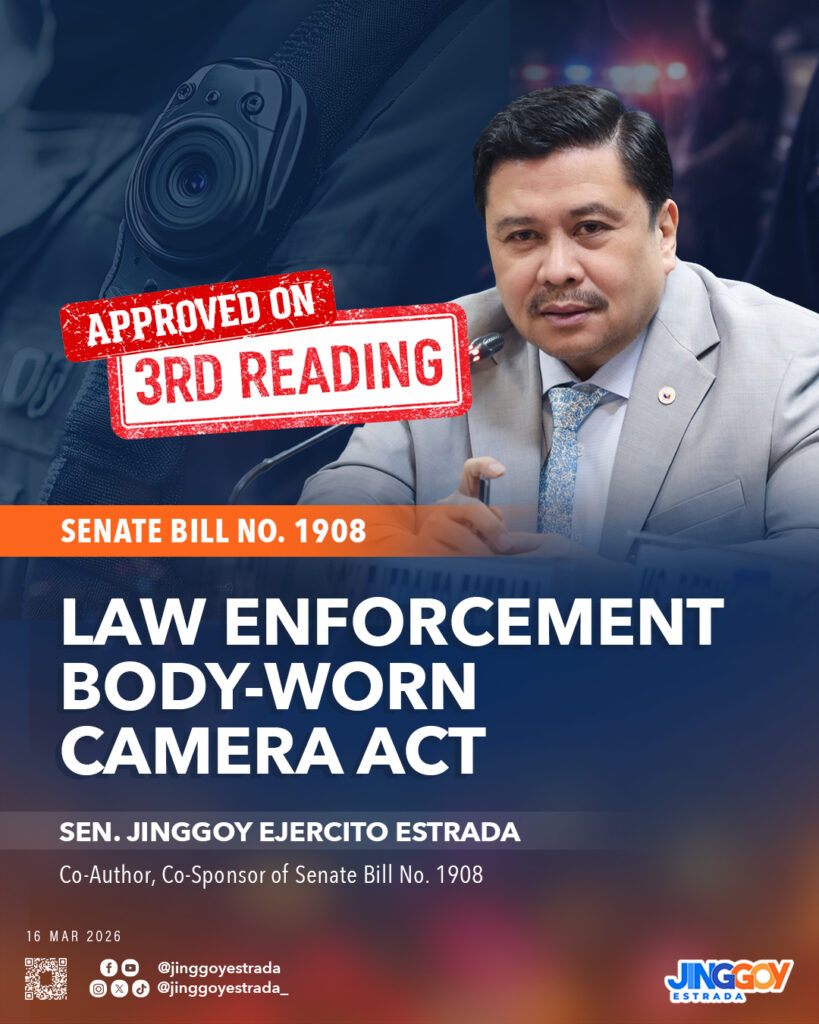
SENATOR Jinggoy Ejercito Estrada has called for the passage of proposed Senate Bill No. 1908, a landmark measure which seeks to require all law enforcers to wear and activate body-worn cameras (BWCs) during police operations to ensure transparency and accountability.
“The Constitution guarantees that no person shall be deprived of life, liberty, or property without due process of law. This bill ensures that these rights are protected not just in principle, but in practice,” Estrada said.
SB 1908 aims to safeguard constitutional rights, prevent abuse, strengthen transparency, and promote accountability in police operations, he added.
In his co-sponsorship speech on the consolidated version of the measure, Estrada pointed out that the Supreme Court itself has recognized the importance of using body-worn cameras in the service of arrest and search warrants.
“This serves two major purposes: first, to protect the public against police misconduct by improving law enforcement accountability; and second, to protect our policemen from false and uncorroborated accusations of abuse,” Estrada said.
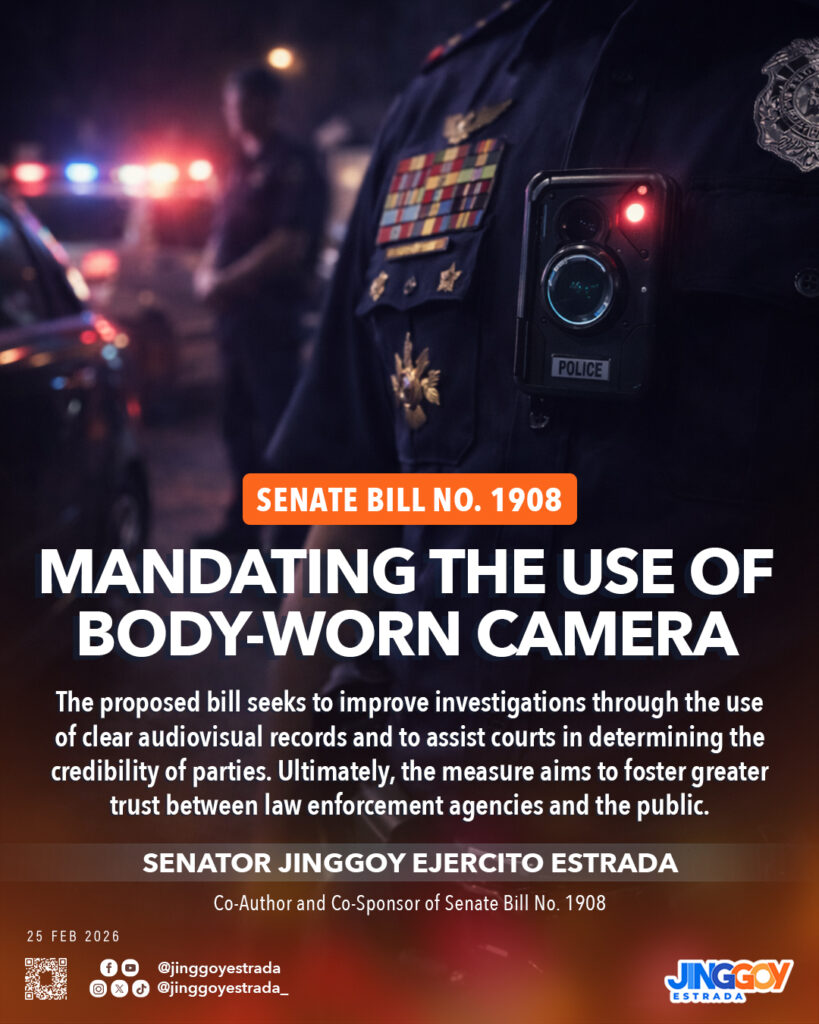
He added that the bill would also improve investigations through clear audiovisual documentation and assist courts in determining the credibility of the parties involved.
“Ultimately, the measure aims to foster greater trust between law enforcement agencies and the public. There is a need to institutionalize this practice and provide the necessary funding,” Estrada stressed.
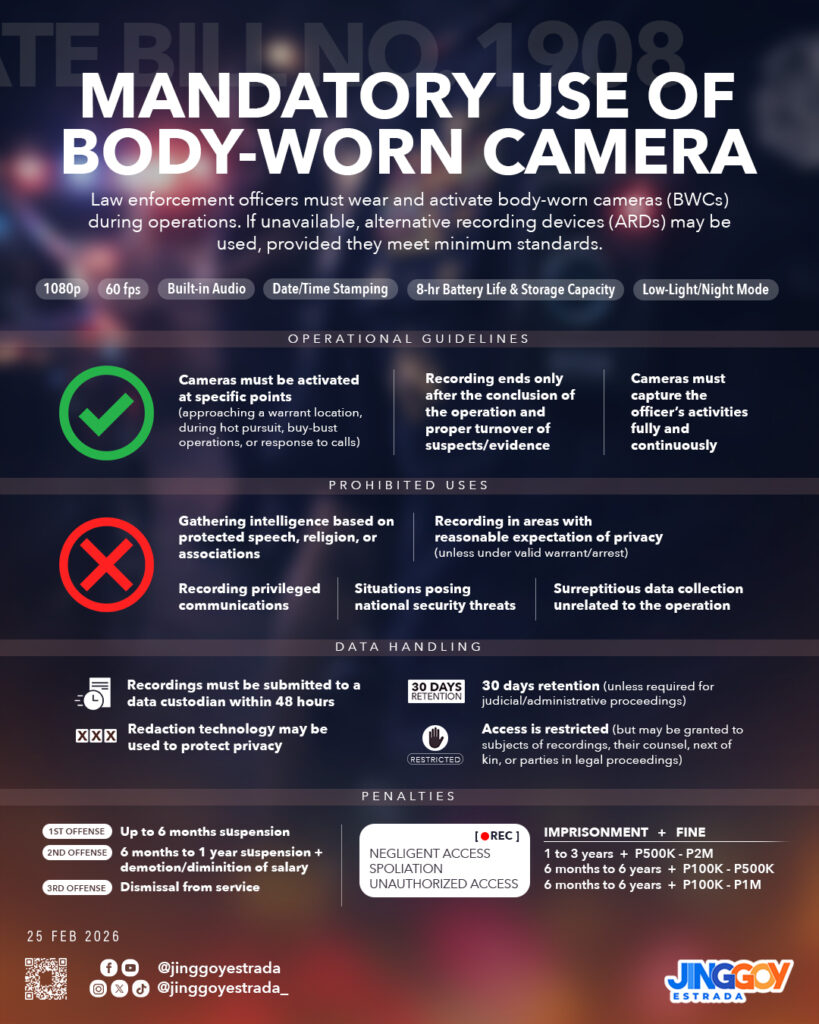
The seasoned lawmaker filed a similar measure, Senate Bill No. 1184, which seeks to require all law enforcers to submit recordings from their BWCs or alternative recording devices (ARDs) to their agency’s data custodian within 48 hours after an operation. Failure to comply may result in administrative penalties, including suspension or dismissal for repeat violations.
Under the proposal, all video footage will be retained by the concerned law enforcement agency’s custodian for 30 days. If a complaint is filed, the footage may only be permanently deleted after the case has been terminated.
To protect privacy, redaction technology may be used to obscure identities; however, the original, unedited footage must always be preserved. Access to recordings will be strictly controlled. Only authorized individuals — including the subjects of the footage, their legal counsel, next of kin, or parties to a pending case — may request copies, subject to the provisions of the Data Privacy Act. Unauthorized access, tampering, or misuse of recordings will carry heavy penalties, including fines of up to P2 million and imprisonment of up to six years.
“This law ensures that body cameras are not just worn, but that the footage is properly safeguarded, retained, and used to uphold justice,” Estrada said. “This policy is intended to enhance transparency in police operations and facilitate the prompt resolution of disputes through more efficient investigations. It will strengthen public trust in law enforcement agencies by promoting accountability, transparency, and responsible conduct.”
Jinggoy, itinutulak ang pagpasa ng panukalang batas sa pagsusuot ng body cameras ng lahat ng law enforcers
HINIMOK ni Senador Jinggoy Ejercito Estrada ang mga kapwa niyang senador na agarang ipasa ang Senate Bill No. 1908, isang mahalagang hakbang na aniya ay nag-aatas sa lahat ng law enforcers sa pagsuot ng body-worn cameras (BWCs) sa kanilang mga operasyon upang matiyak ang transparency at accountability.
“Ginagarantiyahan ng Konstitusyon na walang sinuman ang maaaring pagkaitan ng buhay, kalayaan, o ari-arian nang hindi dumaraan sa due process of law. Sa panukalang ito, titiyakin nating ang mga karapatang ito ay hindi lamang iginagalang sa prinsipyo kundi naipatutupad,” ani Estrada.
Aniya, layon ng SB 1908 na pangalagaan ang mga karapatang ginagarantiya ng Konstitusyon, maiwasan ang pang-aabuso, at itaguyod ang transparency at pananagutan sa mga operasyon ng pulisya.
Sa kanyang co-sponsorship speech sa pinagsamang bersyon ng panukala, binigyang-diin ni Estrada na kinilala mismo ng Korte Suprema ang kahalagahan ng paggamit ng body-worn cameras sa pagsisilbi ng arrest at search warrants.
“Dalawa ang pangunahing layunin nito: una, protektahan ang publiko laban sa maling gawi ng pulisya sa pamamagitan ng mas malinaw na pananagutan; at ikalawa, protektahan ang ating mga pulis laban sa mga maling paratang ng pang-aabuso,” aniya.
Bukod sa mas malinaw na ebidensiya para sa imbestigasyon at paglilitis, sinabi ni Estrada na ang panukala ay magpapatibay ng tiwala ng publiko sa mga law enforcement agencies.
“Kinakailangang maisabatas at mapondohan nang maayos ang ganitong polisiya,” diin ng senador.
Nauna nang naghain ang beteranong mambabatas ng kahalintulad na panukala, ang Senate Bill No. 1184, na nagtatakda ng mahigpit na regulasyon sa pagsusumite, pag-iingat, at paggamit ng mga recording mula sa BWCs o alternative recording devices (ARDs). Sa ilalim ng panukala, ang mga video ay dapat isumite sa data custodian ng kanilang ahensya sa loob ng 48 oras matapos ang operasyon, at dapat panatilihin sa loob ng 30 araw o hanggang matapos ang kaso kung may naghain ng reklamo.
Ang hindi pagsunod dito ay maaaring magresulta sa mga administratibong parusa, kabilang ng suspensyon o pagkatanggal sa serbisyo sa mga paulit-ulit na paglabag.
Para mapangalagaan ang privacy, maaaring gumamit ang kapulisan ng redaction technology upang takpan ang pagkakakilanlan ng mga indibidwal, ngunit ang orihinal na footage ay dapat manatiling buo at hindi mababago. Ang hindi awtorisadong pag-access, pagmanipula, o maling paggamit ng recordings ay may mabigat na parusa —kabilang ang multa na hanggang P2 milyon at pagkakakulong ng hanggang anim na taon.
“Hindi sapat na magsuot lamang ng body cameras. Kailangang masiguro na ang mga recording ay ligtas, maayos na naitatago, at ginagamit para sa hustisya,” diin ni Estrada. “Sa ganitong polisiya, mas mapapalakas natin ang transparency sa operasyon ng pulisya, mas mapapabilis ang imbestigasyon, at higit sa lahat, mas mapatatag ang tiwala ng publiko sa ating mga tagapagpatupad ng batas.”